
I Quit My Job to Start a Business Without Any of These Things — And It Nearly Destroyed Me
“Entrepreneurship is living a few years of your life like most people won’t, so that you can spend the rest of your life like most people can’t.”
— Anonymous
How are things in your world? Are you dreaming about starting a business? Maybe you’re already planning your escape from the nine-to-five grind, imagining the freedom of being your own boss. That excitement is beautiful — and it can also be dangerous if you leap without looking.
I jumped into entrepreneurship with passion, a half-baked idea, and absolutely zero preparation. Within eight months, I’d burned through my savings, destroyed my credit, and was seriously considering going back to a job I hated just to survive. All because I skipped steps that seemed boring at the time but turned out to be essential.
Long story short — I’m giving you the complete checklist I wish someone had handed me before I took the leap. This is everything you need to have in place before you start a business, organized so you can actually use it.
Vanessa T.’s Almost-Disaster
Vanessa T. was a talented graphic designer who decided to go freelance. She had skills, she had contacts, and she had confidence. What she didn’t have was a plan.
“I figured I’d just start taking clients and figure out the business stuff as I went,” she told me. “How hard could it be?”
Within six months, she owed $11,000 in taxes she hadn’t set aside, was operating without proper business insurance, and had accidentally violated a non-compete clause from her previous employer that resulted in a cease-and-desist letter.
“I was so focused on the creative work that I ignored everything else. It almost ended before it really started.”
Don’t be Vanessa. Let’s get you prepared properly.
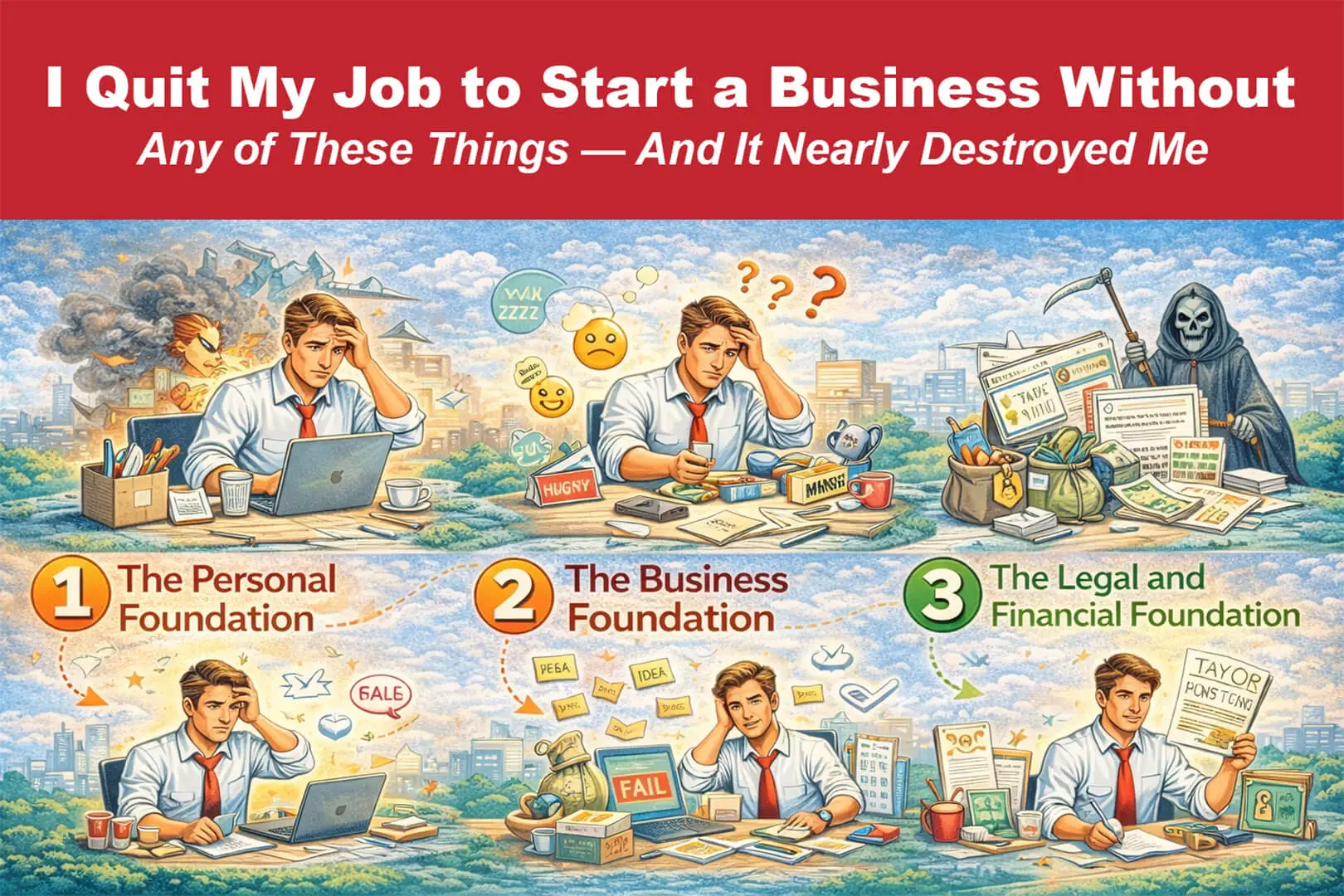
Part One: The Personal Foundation
Passion — Your Fuel for the Hard Days
Starting a business is not glamorous. It’s late nights. It’s rejection. It’s problems you never anticipated. The only thing that will carry you through those moments is genuine passion for what you’re building.
If you’re starting a business just to make money, you won’t last. The money comes slower than you expect, and the challenges come faster. You need to care deeply about the work itself.
Perseverance — Your Commitment to Keep Going
Success doesn’t happen overnight. Every entrepreneur you admire went through a period of grinding when nothing seemed to work. The ones who made it are simply the ones who didn’t quit during that period.
Before you start, honestly assess your perseverance. Can you handle months or even years of slow progress? Can you pick yourself up after failures? Can you keep believing when results don’t match your expectations?
Adaptability — Your Ability to Pivot
Your first plan will be wrong. I guarantee it. The market will shift. Customer needs will change. Competitors will surprise you. The entrepreneurs who thrive are the ones who adapt quickly.
Guidance please: if you’re someone who struggles with change, who needs everything planned perfectly before acting, entrepreneurship will be extra challenging. Work on developing flexibility now.
Risk Tolerance — Your Comfort with Uncertainty
Entrepreneurship is risk. Financial risk. Reputational risk. The risk of failure that everyone will see. You need to be honest about how much uncertainty you can handle.
This doesn’t mean being reckless — calculated risks are different from blind gambling. But if the thought of an unstable income makes you physically ill, you need to address that before you jump.
Part Two: The Business Foundation
A Validated Business Idea
Your idea might feel brilliant to you, but the only opinion that matters is your potential customer’s. Before you invest significant time or money, validate that people actually want what you’re planning to sell — and that they’ll pay real money for it.
Talk to potential customers. Conduct surveys. Test a minimum viable version. Don’t fall in love with an idea the market doesn’t want.
Market Research and Competitive Analysis
Who are you competing against? What are they doing well? Where are the gaps you can fill? Understanding your market isn’t optional — it’s survival.
Research industry trends. Analyze what competitors charge and how they position themselves. Find the underserved segment you can own.
A Comprehensive Business Plan
Your business plan is your roadmap. It includes your mission, your target market, your marketing strategy, your operations plan, and your financial projections. Writing it forces you to think through every aspect of your business before you’re in the trenches.
This doesn’t need to be a hundred pages. But it does need to exist. A business without a plan is just an expensive hobby.
Part Three: The Legal and Financial Foundation
Proper Business Registration
Choose your business structure. Register with your state. Get your federal tax ID. These aren’t exciting steps, but skipping them creates problems that compound over time.
Licenses and Permits
Depending on your industry and location, you may need specific licenses to operate legally. Health permits. Professional licenses. Sales tax certificates. Research what applies to you and get compliant before you launch.
Financial Systems
Separate business bank accounts. Accounting software or a bookkeeper. A system for tracking income and expenses. A plan for setting aside taxes. Cash is king, and you need to manage it properly from day one.
Vanessa’s $11,000 tax surprise came from mixing personal and business finances and never setting aside money for quarterly taxes. Don’t make that mistake.
Adequate Funding
How long can you survive if your business makes zero revenue? You need enough financial runway to get through the startup phase, which always takes longer than you expect. Have at least six months of personal expenses saved, plus enough capital to cover business startup costs.
How Vanessa T. Rebuilt Her Foundation
After her near-disaster, Vanessa took three months to rebuild properly. She formally registered her LLC. She got business insurance. She hired an accountant to clean up her tax situation and set up systems to prevent future surprises.
“It felt like going backwards,” she admitted. “But it was actually the foundation I should have built before I started. Now I can focus on creative work because the business side is handled.”
Today, Vanessa’s design business generates over $200,000 annually. Awesome what’s possible when you build on solid ground.
Your Pre-Launch Checklist
Do you have genuine passion for this business, not just excitement about the idea of entrepreneurship?
Have you validated your idea with actual potential customers?
Do you understand your market, your competition, and your positioning?
Is your business properly registered and legally compliant?
Do you have financial systems in place from day one?
Do you have enough runway to survive the startup phase?
Learned behaviors can be unlearned. If you’ve been charging forward without proper preparation, it’s not too late to pause and build the foundation you need. The entrepreneurs who last aren’t the ones who start fastest — they’re the ones who start smartest.
Your dream business is waiting. Make sure you’re truly ready to build it.
Hugs, Love and Prayers,
Larisa