
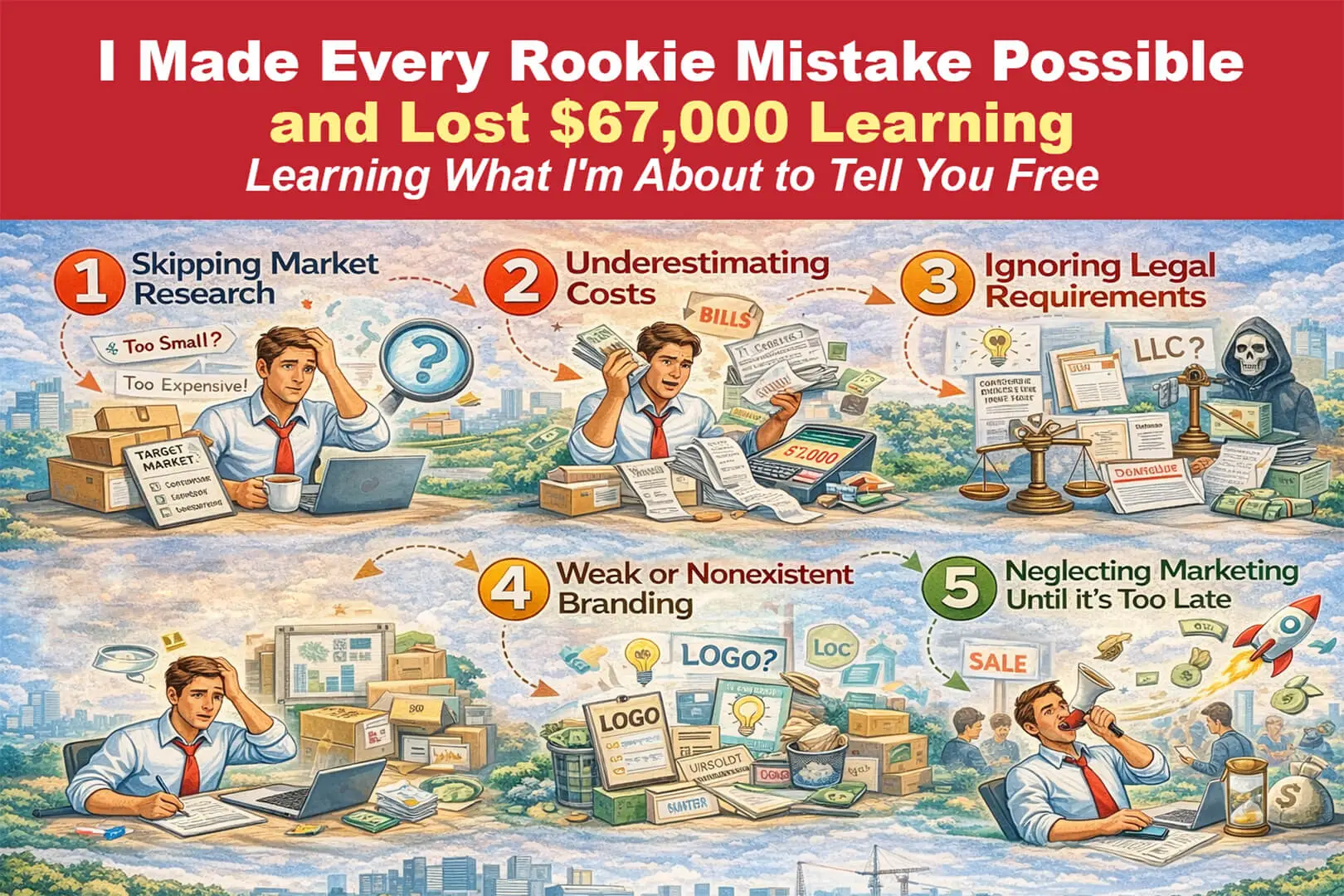
I Made Every Rookie Mistake Possible and Lost $67,000 Learning What I'm About to Tell You Free
“Good judgment comes from experience, and experience comes from bad judgment.”
— Rita Mae Brown
How are things in your world? Are you about to start a business, or did you just launch one? Either way, let me save you from the pain that catches nearly everyone who takes this leap.
Here’s the scary truth: about eighty percent of new businesses fail within the first year. Not because entrepreneurs aren’t smart or passionate or hardworking — but because they make preventable mistakes that drain their resources before they ever gain traction.
Long story short — I’ve made these mistakes. My clients have made these mistakes. And today I’m laying them out so you can skip the expensive lessons and go straight to building something that actually survives and thrives.
Michael B.’s $84,000 Education
Michael B. had the perfect product idea — a specialized fitness tool that he was certain people would love. He’d used it himself for years, showed it to friends who raved about it, and was convinced he’d found a goldmine.
So he did what many excited entrepreneurs do: he invested $84,000 in inventory, built a professional website, and launched with a massive marketing push.
“I sold forty-seven units in the first month,” Michael told me, his voice flat. “Forty-seven. Out of 5,000 pieces of inventory sitting in my garage.”
What went wrong? Everything we’re about to cover. And the painful part is that every single mistake was avoidable.
Mistake #1: Skipping Market Research
Michael’s biggest error was assuming that because HE loved the product, the market would too. He never validated demand. He never researched competitors. He never asked potential customers if they’d actually buy.
Market research isn’t optional — it’s survival. Before you invest a single dollar, you need to know who your customers are, what they’re already buying, what problems keep them up at night, and whether they’ll pay money to solve those problems.
Remember Blockbuster? They ignored market research that showed streaming was the future. Remember Pets.com? They launched without understanding that shipping dog food costs more than the profit margin allows. These weren’t stupid companies — they just didn’t do the homework.
Guidance please: before you launch anything, talk to at least fifty potential customers. Not friends and family who’ll tell you what you want to hear — real strangers who represent your target market. If they’re not excited, reconsider your plan.
Mistake #2: Underestimating Costs
Most entrepreneurs dramatically underestimate what it actually costs to start and run a business. They budget for the obvious stuff — inventory, website, maybe some ads — but forget about licensing, insurance, legal fees, accounting, shipping supplies, packaging, returns, and the thousand other expenses that show up uninvited.
Cash is king, and running out of cash is the number one killer of new businesses. It doesn’t matter how good your product is if you can’t keep the lights on long enough for customers to find you.
Create a detailed budget that includes everything you can think of — then add twenty percent for the things you can’t think of. Build a cash reserve that covers at least six months of operations. Hope for the best, but plan for the worst.
Mistake #3: Ignoring Legal Requirements
I’ve watched entrepreneurs skip business registration, operate without proper licenses, ignore tax obligations, and get absolutely crushed later by fines, lawsuits, and back payments that drained their profits.
“I didn’t think I needed a permit for that” is an expensive sentence. Before you launch, understand what your local government requires: business registration, sales tax certificates, professional licenses, health permits if applicable, insurance requirements. Get it right from the start.
Uber paid $100 million to settle a lawsuit about worker classification. Forever 21 faced massive copyright infringement suits. These are cautionary tales about what happens when you cut legal corners. Don’t let your business become another one.
Mistake #4: Weak or Nonexistent Branding
Your brand isn’t your logo — it’s the feeling people get when they interact with your business. It’s why someone chooses you over the competitor who might even be cheaper.
Too many new businesses launch with generic names, forgettable visuals, and messaging that sounds like everyone else. In a crowded marketplace, bland is invisible. You need to stand for something specific.
What makes you different? What’s your story? Why should anyone care? If you can’t answer those questions clearly and compellingly, your ideal customers will scroll right past you.
Mistake #5: Neglecting Marketing Until It’s Too Late
“Build it and they will come” is a lie that kills businesses. You can have the greatest product in history, but if nobody knows about it, you have nothing.
Marketing isn’t something you do after you launch — it’s something you do before, during, and forever after. Build your audience before you need them. Create content that provides value. Show up consistently so when people are ready to buy, you’re already in their mind.
Michael B. finally sold through his inventory, but it took him two and a half years instead of six months. The difference? He had to rebuild his approach from the ground up, starting with the audience-first strategy he should have used from day one.
How to Start Right the First Time
Do your research before you spend money. Validate your idea with real potential customers, not just people who love you and want to be supportive.
Build a comprehensive budget and then add a buffer for surprises. Understand your break-even point and how long it will take to reach it.
Get your legal foundation solid before you launch. The money you spend on proper setup will save you multiples in problems avoided.
Develop a brand that stands out and tells a story worth remembering. Be specific about who you serve and why you’re different.
Start marketing yesterday. Build an audience, create valuable content, and establish your presence before you need to generate sales.
Learned behaviors can be unlearned. If you’ve already made some of these mistakes, that’s okay — you can course-correct. The entrepreneurs who ultimately succeed aren’t the ones who never make errors; they’re the ones who learn fast and adapt faster.
Your business deserves to be in the twenty percent that makes it. Now you know how to stack the odds in your favor.
Hugs, Love and Prayers,
Larisa