
I Had $47 in My Account When the Furnace Died in February
“It is not the return on my investment that I am concerned about; it is the return of my investment.”
— Will Rogers
How are things in your world? Be honest with me for a second — if your car broke down tomorrow and needed a $1,500 repair, would you have that money available without touching a credit card? If your answer is no, you’re not alone. But you’re also not safe.
I used to be the person who thought emergency funds were for people who had “extra” money. Spoiler alert: there’s no such thing as extra money when you’re building a business or raising a family. There’s only money you’re intentional about and money that slips through your fingers. And when life comes swinging — and it always does — that lack of intentionality will knock you flat.
Long story short — I’m going to tell you exactly why cash is king when life falls apart and give you the simple roadmap to build your safety net, even if you’re starting from zero.
Marcus T.’s Nightmare Scenario
Marcus T. was doing everything right. At least, that’s what he thought. He paid his bills on time, kept his credit score in the high 700s, and even managed to save a little for retirement. What he didn’t have was cash sitting in a savings account for emergencies.
“I figured I could just use my credit card if something came up,” he told me. “That’s what it was for, right?”
Then the pandemic hit. Marcus’s employer cut his salary by forty percent. His wife was laid off completely. And within three months, they’d maxed out $23,000 in credit card debt just trying to keep the lights on and food on the table. The interest alone was eating them alive.
That situation didn’t have to happen. And yours doesn’t have to either.
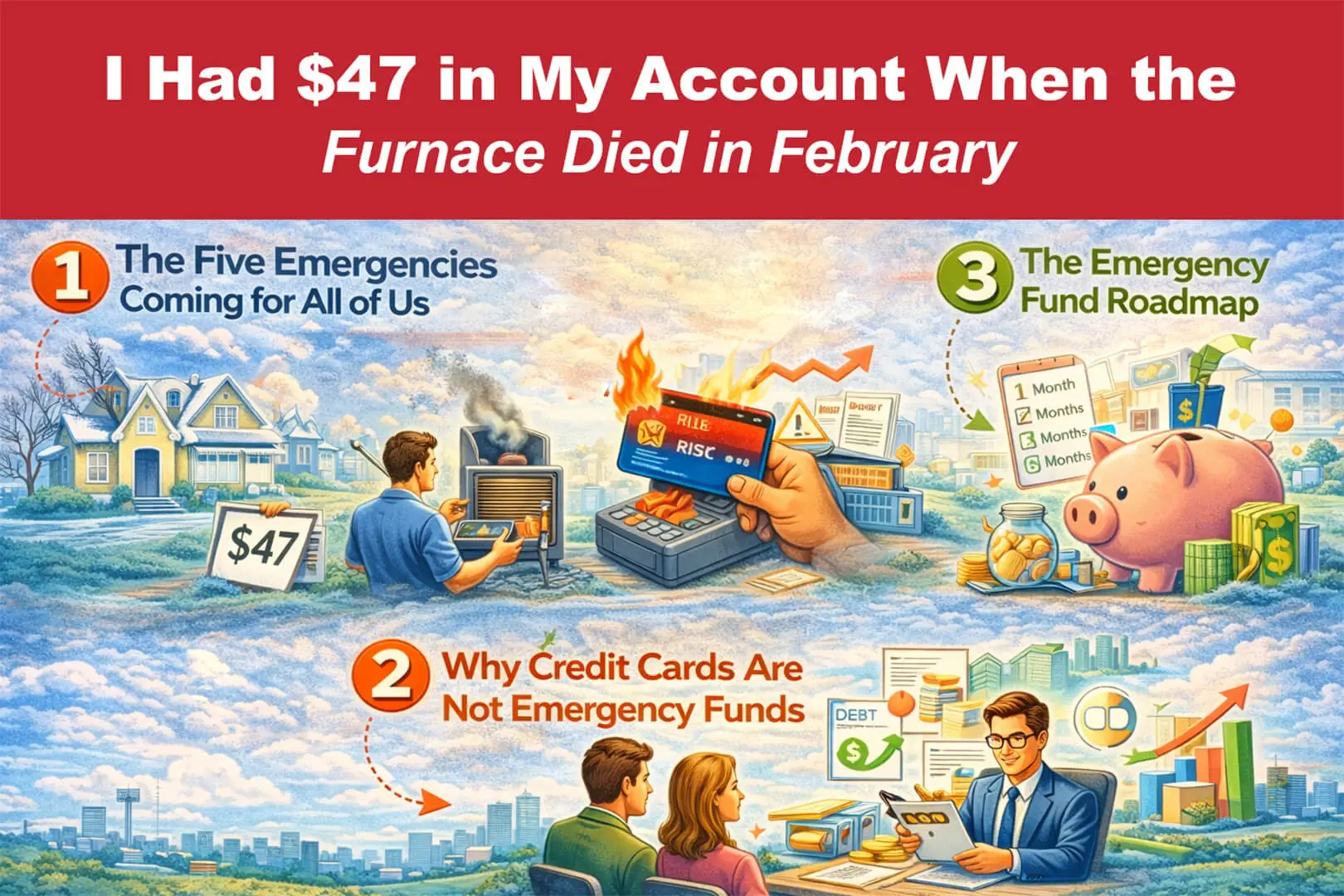
The Five Emergencies Coming for All of Us
I’m not trying to scare you. I’m trying to prepare you. Here’s what could happen — and probably will at some point:
Job loss. There is no such thing as “job security” anymore. Companies close. Layoffs happen. Sometimes with little or no warning. If you don’t have a cash reserve, unemployment becomes an immediate crisis instead of a stressful transition.
Medical emergencies. Accidents and unexpected illnesses don’t check your bank balance before they show up. You or a loved one could end up needing emergency surgery or a hospital stay. The bills pile up while you’re also losing income from being out of work. That double hit can be financially devastating without a cushion.
Car trouble. Towing and repairs aren’t cheap. You might need a rental car on top of the repair bill just to get to work. One breakdown can cascade into missed work, late payments, and mounting stress.
Appliance failures. Your refrigerator doesn’t care that you just paid for school supplies. When it dies, it dies. Repairs are costly and replacements can cost a small fortune. But going without a refrigerator or stove isn’t really an option.
Home repairs. Leaking roofs. No hot water. Electrical problems. Many aren’t covered by homeowners insurance. These repairs are expensive and usually show up at the worst possible time.
Why Credit Cards Are Not Emergency Funds
I hear this all the time: “But Larisa, I have credit available. That’s basically the same thing.”
Guidance please — it is absolutely not the same thing. Here’s why:
Credit cards charge interest. Unless you pay the balance in full immediately (which defeats the purpose if you’re in an emergency), you’re adding fifteen to twenty-five percent on top of whatever disaster you’re already dealing with.
Credit limits can change. I’ve seen credit card companies lower limits with no warning — often right when people need them most. They see you’re in financial stress and they protect themselves by cutting your access.
Debt creates more stress. Going into debt during an already stressful situation compounds everything. Now you have the original problem plus monthly payments plus interest plus the psychological weight of owing money. It’s a spiral that’s hard to escape.
Cash is king. Period. Cash doesn’t charge interest. Cash doesn’t get nervous and disappear. Cash is there when you need it, no questions asked.
The Emergency Fund Roadmap
Here’s how to build yours, step by step:
First goal: $500. This handles minor emergencies — a car repair, a medical copay, an unexpected bill. It’s not everything, but it’s a start. And that start matters more than you know.
Second goal: $1,000. This gives you breathing room. Most common emergencies can be handled with a thousand dollars in the bank. You’ll sleep better at night.
Ultimate goal: Six months of living expenses. I know this sounds like a lot. It is a lot. But a job loss or disability could keep you out of work that long or longer. This fund isn’t built overnight — it takes consistent saving month after month. But it can be done.
Keep it accessible. Your emergency fund belongs in an easy-access account like an interest-bearing money market or high-yield savings account. Not invested in the stock market. Not locked in a CD. Available when you need it, within twenty-four hours.
How Marcus T. Rebuilt His Foundation
After digging out of that $23,000 debt — which took him two and a half painful years — Marcus became obsessed with never being in that position again. He started small. Twenty-five dollars from every paycheck went directly into a separate savings account he didn’t touch.
“It felt pointless at first,” he admitted. “What’s twenty-five dollars going to do?”
But twenty-five dollars twice a month is six hundred dollars a year. And once he saw that account growing, he found ways to add more. Sold some stuff. Cut a subscription. Put his tax refund straight into savings.
Three years later, Marcus has eight months of expenses sitting in his emergency fund. “I actually hope I never have to use it,” he laughed. “But knowing it’s there? That peace of mind is priceless.”
Awesome, right?
Start Today, Not Tomorrow
I don’t care if you can only save ten dollars this month. Open a separate savings account today. Set up an automatic transfer, even a tiny one. The habit matters more than the amount right now.
Learned behaviors can be unlearned. If you’ve never been a saver, that’s okay. You’re learning now. Each deposit is a vote for your future self, a vote for peace instead of panic when life gets hard.
Because life will get hard. That’s not pessimism — that’s reality. The question is whether you’ll face those hard times from a position of stability or a position of desperation.
Your future self is counting on you. Don’t let them down.
Hugs, Love and Prayers,
Larisa